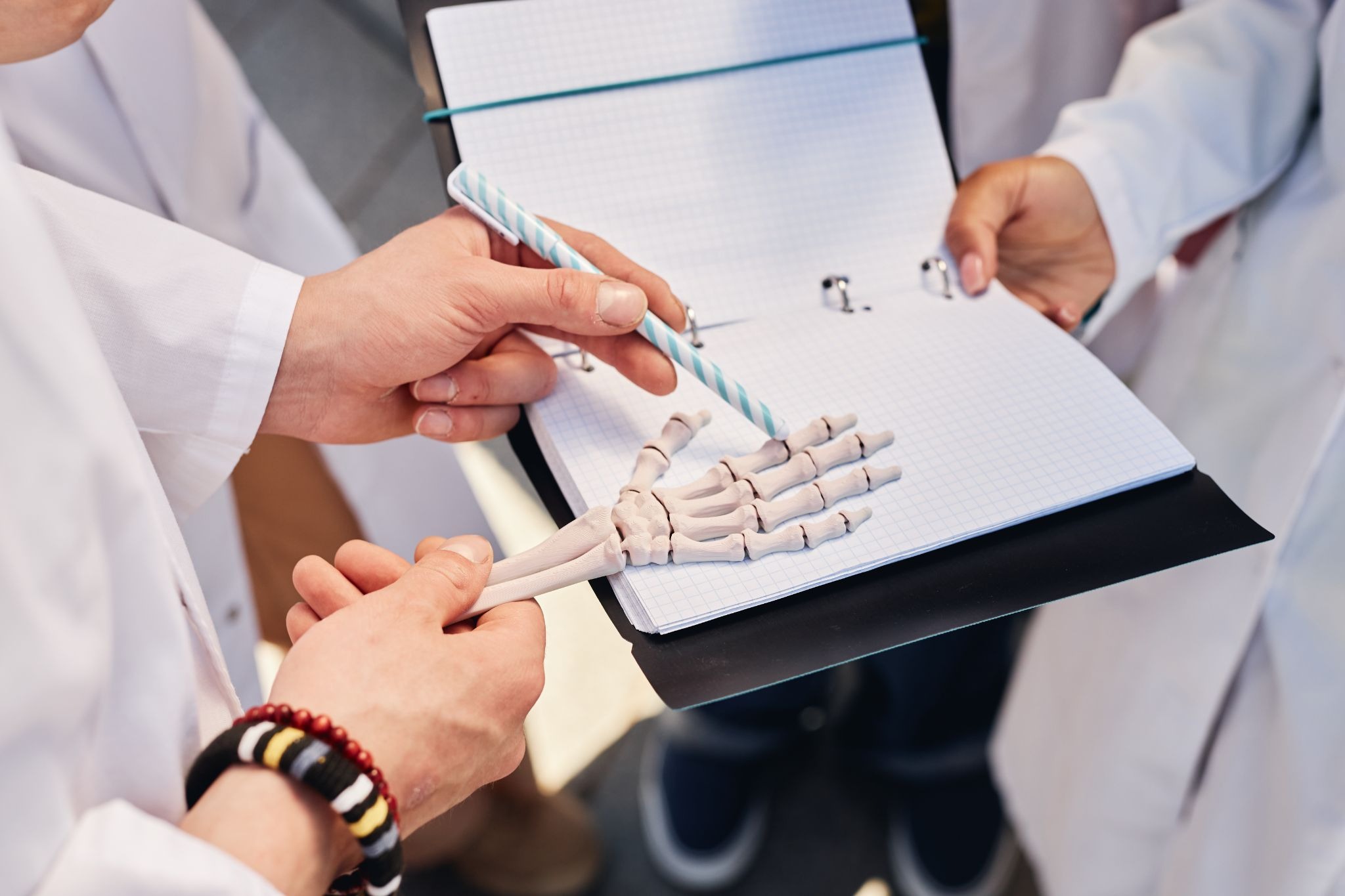
Every published orthopedic study begins with a question. A surgeon may notice that some patients recover differently after the same procedure. A research team may wonder whether one surgical technique improves implant positioning or reduces complications. Another question might involve rehabilitation, imaging, joint replacement durability, or patient satisfaction.
Turning that question into reliable medical evidence requires much more than collecting a few observations. Orthopedic research follows a structured process involving study design, ethical review, patient selection, data collection, statistical analysis, scientific writing, and peer review.
For orthopedic specialists such as Dr. Michael Gaudiani, research can help connect everyday clinical questions with evidence that informs future patient care. Understanding how an orthopedic study develops also helps patients appreciate why high-quality medical research takes time.
Research Usually Begins With a Clinical Question
Many valuable studies start with something physicians observe during clinical practice.
A surgeon might notice that patients with a certain type of knee injury respond differently to treatment. Researchers may also identify gaps in existing medical literature. Perhaps a procedure has excellent short-term results, but little information exists about outcomes five years later.
The research team then turns the broad idea into a specific, testable question.
Instead of asking, “Does robotic knee surgery work?” researchers might ask whether patients receiving robotic-assisted partial knee replacement have different five-year implant survival rates compared with patients undergoing conventional surgery.
A precise research question helps determine almost every step that follows.
Reviewing What Researchers Already Know
Before starting a new orthopedic study, investigators typically review existing research.
Medical databases contain thousands of studies covering fractures, joint replacement, sports injuries, arthritis, surgical techniques, implants, imaging, rehabilitation, and other orthopedic subjects.
A literature review helps researchers determine whether previous research has already answered their question. It can also reveal weaknesses or unanswered questions in previous studies.
Researchers may discover that earlier studies involved small patient populations, short follow-up periods, or conflicting results. Those gaps can help shape the new research project.
This stage is essential because useful medical research should add meaningful information rather than simply repeat what is already well established.
Choosing the Right Study Design
The research question determines the most appropriate study design.
Some orthopedic studies are retrospective. Researchers review medical records and analyze outcomes from patients who have already received treatment.
Other studies are prospective. Investigators establish the research plan first, then follow patients over time.
Randomized controlled trials may compare two treatments by assigning eligible participants to different groups. When carefully designed, these studies can provide strong evidence of treatment effectiveness.
Orthopedic researchers also use registry studies, database analyses, case-control studies, cohort studies, systematic reviews, and meta-analyses.
Each approach has strengths and limitations. A large database can provide information about thousands of patients, while a smaller prospective study may collect more detailed clinical information.
Protecting Patients and Research Participants
Research involving patients requires ethical oversight.
Depending on the study type and institution, researchers may need review from an institutional review board, commonly called an IRB, or another appropriate ethics committee.
The review process considers patient safety, privacy, informed consent, and the responsible use of medical information.
Researchers must also protect identifiable patient information and follow applicable privacy requirements.
These protections are essential to responsible clinical research. Scientific progress is important, but it must occur within ethical standards designed to protect the people whose experiences contribute to medical knowledge.
Collecting Reliable Orthopedic Data
Once approvals are complete, data collection can begin.
High-quality research depends on accurate and consistent information. Researchers may collect surgical details, imaging findings, clinical examination results, complications, revision procedures, and patient questionnaires.
Consistency matters.
If one patient’s knee function is measured differently from another patient’s, comparing the results becomes difficult. Research teams therefore use standardized methods whenever possible.
Long-term studies create additional challenges because researchers need patients to return for follow-up several years after treatment.
Loss to follow-up can weaken a study if too many participants are unavailable when researchers evaluate outcomes.
This is one reason five-year and ten-year orthopedic studies can take significant time and coordination.
Statistics Turn Data Into Evidence
Collecting information is only part of the research process. Investigators also need to determine what the data actually mean.
Statistical analysis helps answer that question.
Researchers may compare outcomes between treatment groups, determine whether differences are statistically significant, examine implant survival, or identify factors associated with complications.
The study population size is also important. A study involving too few patients may fail to detect a meaningful difference even when one exists.
Researchers may work with statisticians during both study planning and final analysis to select appropriate methods.
Statistics cannot make a poorly designed study reliable, but good statistical methods can help researchers interpret well-collected data accurately.
Writing the Scientific Manuscript
After researchers analyze the results, they begin preparing a manuscript for publication.
Most medical research papers follow a familiar structure. They explain the study’s purpose, describe the research methods, present the results, and discuss what the findings may mean.
The discussion section is particularly important because researchers compare their findings with previous studies and explain possible reasons for similarities or differences.
Authors must also acknowledge limitations.
For example, a retrospective study may contain selection bias. A small study may not represent every patient population. Short follow-up may not reveal long-term implant failures.
Being transparent about these limitations allows readers to judge the strength of the evidence more accurately.
For physicians, including Dr. Michael Gaudiani, contributing to orthopedic research involves not only asking meaningful questions but also communicating results clearly enough for other clinicians and researchers to evaluate them.
From One Question to Better Orthopedic Knowledge
The journey from an orthopedic question to a published journal article follows a structured path. Researchers identify an important problem, review existing evidence, select an appropriate study design, protect participants, collect reliable information, analyze the results, and submit their findings to scientific review.
The process can take years, especially when it involves long-term patient outcomes.
Yet that careful process is what gives clinical research its value. Every well-designed study adds another piece to the broader understanding of orthopedic treatment, surgical outcomes, and patient recovery.
Research does not eliminate uncertainty overnight. Instead, it gradually replaces assumptions with stronger evidence. Through continued investigation, orthopedic specialists can refine surgical techniques, understand complications, evaluate new technology, and make increasingly informed decisions about patient care.
FAQ
How does an orthopedic research study begin?
Most studies begin with a specific clinical question based on patient care, previous research, or an unanswered problem in orthopedic medicine.
What types of orthopedic studies are common?
Common designs include retrospective studies, prospective studies, randomized controlled trials, cohort studies, database studies, systematic reviews, and meta-analyses.
Why is patient follow-up important in orthopedic research?
Long-term follow-up helps researchers evaluate durability, complications, revision surgery, function, and whether treatment benefits continue over time.
What is peer review?
Peer review is a process in which independent experts evaluate a scientific manuscript before publication. They examine its methods, results, interpretation, and overall scientific quality.
Does one published study prove that a treatment is better?
Usually not. Physicians consider study quality, limitations, patient population, and findings from other research before drawing broader clinical conclusions.
Why can orthopedic research take several years?
Studies examining implant survival or long-term recovery may require researchers to follow patients for five, ten, or more years before they can draw meaningful conclusions.